
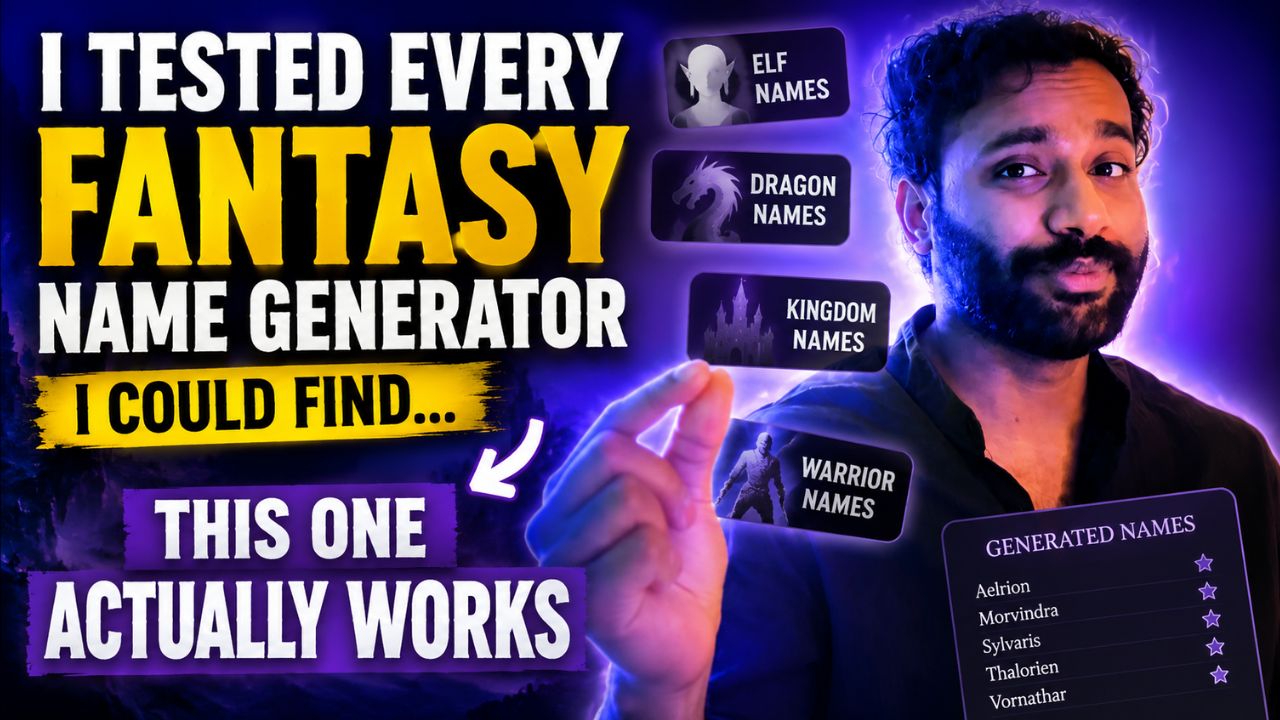
By MD Jalal Uddin | Dungeon Master, Fantasy Writer & Chronic Worldbuilder Last updated: May 2026 · 8 min read
Let me be honest with you.
I used to spend an embarrassing amount of time stuck on names. Not on plot. Not on lore. Names. I’d have this whole dungeon mapped out, a villain with a backstory that made me genuinely proud, and then I’d sit there for twenty minutes trying to figure out what to call the tavern the players walk into in the first five minutes.
My players never cared as much as I did. But I cared. A lot.
After trying what felt like every name generator on the internet — most of which produced garbage like “Xorthblat” or “Zygnomius” — I found one that actually respects the craft. This guide is my honest breakdown of how it works, when it’s useful, and how to squeeze the best results out of it.
If you’re a DM, a fantasy writer, a game developer, or just someone building a world in your spare time, stick around. This one’s worth your time.
What Even Is a Fantasy Name Generator?
Not all name generators are equal — and most are pretty terrible, honestly.
The bad ones spit out random syllables and call it a day. You get names that look like someone sneezed on a keyboard, and nothing feels like it belongs anywhere. They’re useless at the table and worse in a manuscript.
A good fantasy name generator works differently. It uses phoneme-based logic — basically, rules about which sounds naturally follow other sounds — so the names it produces actually feel like they could exist in a real constructed language. Elven names come out soft and flowing. Demon names come out harsh and guttural. Warrior names land somewhere short and punchy.
The difference is immediately obvious when you use one. Instead of “Xorthblat,” you get “Aelrion.” Instead of “Zygnomius,” you get “Drakthor.” Those names don’t just look better — they sound better when you say them out loud, which matters enormously at a table full of people waiting for you to describe a scene.
The Six Categories (And What I Actually Use Each One For)
Here’s where this tool earns its keep. Instead of throwing everything into one pot, it separates names into six categories — each with its own phonetic DNA. Here’s my honest take on all of them.
🧝 Elf Names — For when elegance matters
Soft consonants, long vowels, names that feel like they were written in moonlight. You know the vibe.
What comes out: Aelrion, Sylvaris, Elandor, Thaliveth, Caerindë
I use these for my elven NPCs obviously, but honestly also for any character I want to feel ancient or otherworldly — forest spirits, arcane scholars, that kind of thing. There’s something about a name like “Sylvaris” that immediately signals to players: this person is not from around here, and they’ve been alive a very long time.
🐉 Dragon Names — For the names players remember forever
Hard syllables. Deep vowels. The kind of name that sounds like it should be written on the wall of a tomb.
What comes out: Drakthor, Pyrovax, Ignaroth, Skalveth, Morghûn
True story: the dragon in my last campaign was named Ignaroth the Ashen. I generated about fifteen options, mashed two together, added a title. One of my players — who has been at my table for four years — told me last month it was the best villain name we’ve ever had. That name took me three minutes. I’ll take it.
This category works for anything ancient and powerful: dragons, elder gods, demons who predate recorded history, that sort of thing.
⚔️ Warrior Names — My personal favourite, and the most useful at the table
Short. Punchy. Sounds like someone who has broken a lot of things.
What comes out: Ironbane, Thorgar, Ravok, Greymantle, Keldros
This is the category I go back to most. You know the situation: players walk into an unplanned location, ask for the bouncer’s name, and everyone’s looking at you. “Thorgar” comes out of my mouth in under two seconds and the scene keeps moving. No freeze, no fumbling.
If you’re a DM who struggles with improv, honestly just bookmark this category and keep it open during sessions. It will save you more than once.
🏰 Kingdom Names — For when the world needs to feel real
These aren’t character names — they’re place names. And they’re surprisingly hard to get right on your own.
What comes out: Stormhaven, Eldoria, Valemire, Ashencroft, Duskfell
A good kingdom name does a lot of quiet work. “Stormhaven” tells you something about geography and history before you’ve explained a single thing. “Ashencroft” sounds like something bad happened there once. Names like these do the worldbuilding for you, almost subliminally.
I use this category constantly when I’m building out a new region and need city names fast. Run it ten times, pick three, and suddenly your map feels like it has centuries of history.
🔮 Mage & Wizard Names — For characters who are smarter than everyone else
Long, complex, a little difficult to say on the first try. That’s kind of the point.
What comes out: Veltharion, Morvex, Zerathis, Caldûn the Grey, Ireneth Spellweave
There’s a reason the wizard in every story has a weird name. It signals that this person exists slightly outside normal society — they’ve spent decades buried in books that regular people will never read. A name like “Veltharion” carries that weight automatically. You don’t have to explain it.
👹 Demon & Dark Fantasy Names — For the names that make players nervous
Guttural, unsettling, wrong in a way that’s hard to explain.
What comes out: Malzorath, Azrakar, Voidgrim, Shael’keth, Nyxaroth
I genuinely love this category. There’s something about a name like “Malzorath” that makes players lean forward slightly, like they know this one is going to be a problem. If you’re writing a villain and you want readers to feel dread before they’ve seen what the character can do — start with a name from this list.
How to Use It (The Actual Step-by-Step)
It’s simpler than you’d expect. Here’s exactly how I use it.
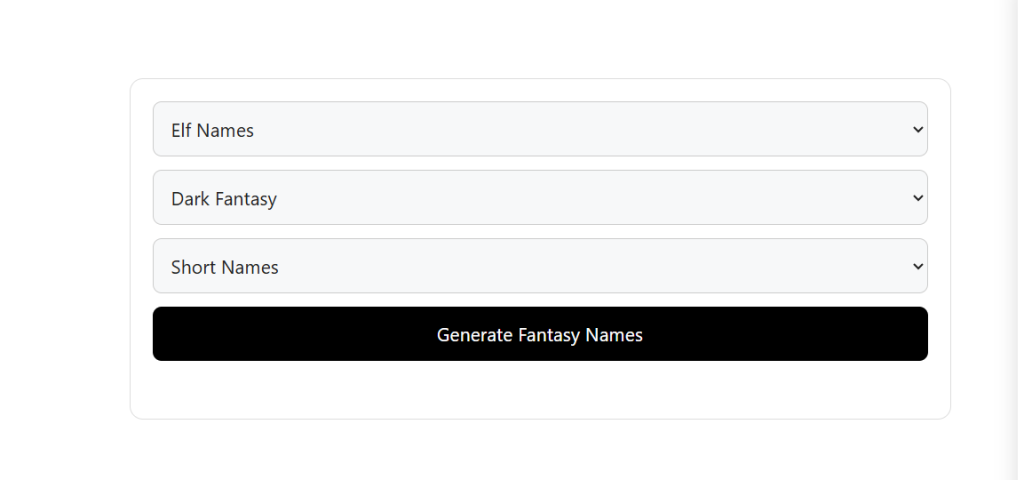
Step 1 — Pick your category
Start with what you’re actually trying to name: Elf, Dragon, Warrior, Mage, Kingdom, or Demon. Don’t overthink this — if you’re not sure, pick the closest match and see what comes out. You can always switch.
Step 2 — Pick a style
This is the part most people skip, and they’re missing out. The style selector completely changes the flavour of the results:
| Style | What it actually sounds like |
|---|---|
| Dark Fantasy | Heavy, grim, consonant-heavy names — think grimdark novels |
| Medieval | Grounded, Old English roots — feels like proper fantasy literature |
| Magic | Unusual vowel patterns, arcane-sounding — good for wizards and strange places |
| Viking | Short, blunt, hard-edged — great for warriors and northern clans |
| Anime | Melodic, softer — perfect if your world has Japanese-inspired influences |
I’ll often run the same category twice with two different styles just to compare. Sometimes the Viking version of a warrior name is exactly right. Sometimes the Dark Fantasy version is better. Takes ten seconds to find out.
Step 3 — Pick a length
- Short — one or two syllables. Side characters, monsters, quick NPCs
- Medium — two or three syllables. Main characters, important locations
- Long — three or more syllables. Legendary figures, ancient places, powerful villains
A rule of thumb I’ve developed over years of DMing: name length signals importance. Your village blacksmith can be “Ravok.” The ancient lich-king he unknowingly serves should be “Ravokenthal the Undying.” Length alone communicates hierarchy to your players without you having to say a word.
Step 4 — Hit generate and look at the whole batch
Don’t just grab the first name you like. Look at all of them. Sometimes the best one is the third or fourth result, and sometimes none of them are quite right — but you’ll spot two syllables in different names that, combined, become exactly what you needed.
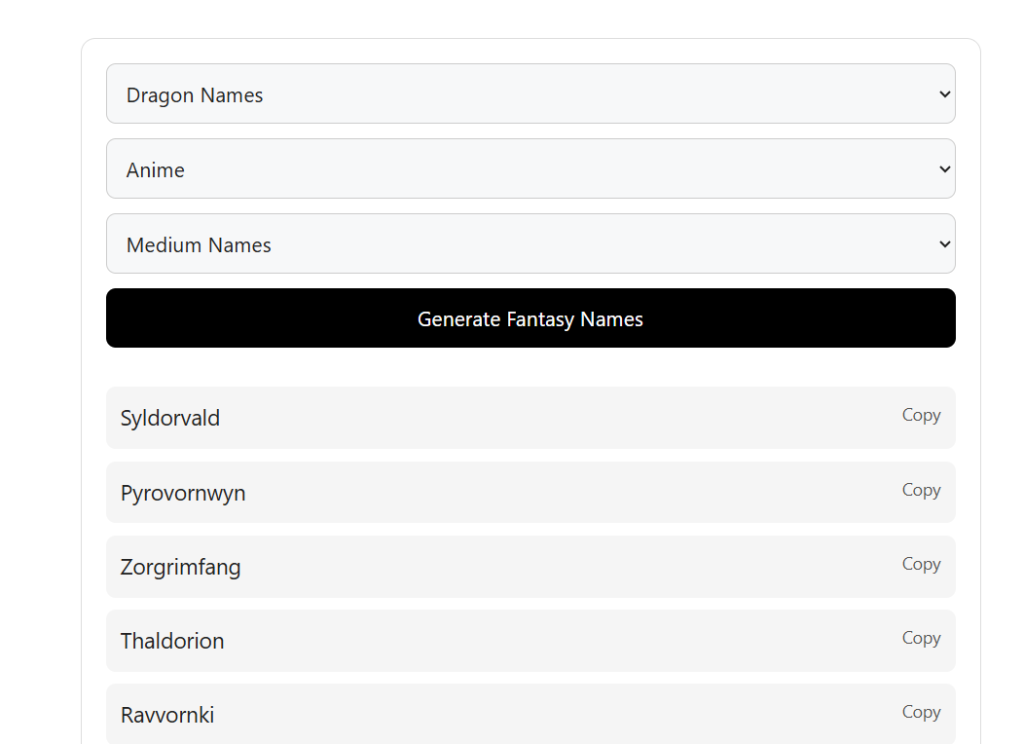
Step 5 — Copy it and keep moving
Click to copy. Don’t second-guess yourself into paralysis. If it feels right, use it. You can always refine later — and honestly, the names you pick quickly are often the ones that stick.
The Tips That Actually Made a Difference For Me
Combine two generated names instead of using one raw. This is my single favourite trick. Take the first half of one name and the second half of another. “Veltharion” + “Morvex” = “Veltmor.” Nobody generated that. It feels original because it basically is. Takes thirty seconds and produces something you can genuinely call your own.
Build a naming convention per race and stick to it. If your elves all have names ending in “-iel” or “-is,” enforce that. Run the generator ten times in the Elf category, note the patterns, then use those patterns as your house rules. Consistency is the difference between a world that feels designed and a world that feels thrown together.
Edit the output — always. I never use a generated name exactly as it comes out. I’ll change one letter, add a title, drop a syllable. The generator gives you a starting point, not a finished product. Treating it as raw material rather than a final answer is what separates names that feel truly yours from names that feel borrowed.
Keep a running list during sessions, not just before. I have a notes doc open during every session with a fresh batch of warrior and kingdom names pre-generated. When something unexpected happens — and in D&D, it always does — I’m never stuck. I just glance at the list and pick one. Players never know it took me zero thought. That’s the goal.
Who Is This Actually For?
I’ve recommended this tool to a lot of people over the years. Here’s who genuinely gets the most out of it:
Dungeon Masters — especially for improv. The session where you’re perfectly prepared is rare. The session where players go completely off-script is every session. Having a name generator you trust changes everything about how confident you feel in those moments.
Fantasy writers — especially early in a project. When you’re still figuring out the tone of a world, generating a few dozen names across different categories tells you something about how you want the language to feel. It’s surprisingly useful as a worldbuilding exercise, not just a naming tool.
Indie game developers — populating a world with hundreds of named locations, factions, and characters is genuinely tedious without help. This cuts that process down significantly without producing names that feel generic.
Minecraft and Discord server admins — sounds niche, but I know people who run entire RPG servers with custom lore and naming conventions. Getting fifty consistent kingdom names in one sitting is the kind of thing this tool is genuinely built for.
Anyone in a creative block — sometimes you just need something on the page to react to. A bad generated name you immediately want to change is still more useful than a blank one.
One Honest Limitation
It won’t know your world.
The generator doesn’t know that your elven kingdom collapsed three centuries ago, or that names in the northern provinces tend to start with hard consonants because the climate is harsh and the culture is blunt. That context is yours to carry. The tool gives you raw material — your job is to shape it into something that fits.
I think of it the way I think about a random encounter table. It doesn’t replace the DM. It removes the blank-page problem so you can focus on the decisions that actually require creativity — which, thankfully, is most of them.
Frequently Asked Questions
Is it free?
Completely. No account, no sign-up, no paywall. Just open it and use it.
Can I use these names commercially — in a novel, a game I’m selling, etc.?
Generally yes. The names are procedurally generated combinations, not pulled from copyrighted sources. For anything major — a published novel, a commercial game — it’s worth a quick search to make sure the name you’ve landed on isn’t already a known trademarked character. Five minutes of checking now saves a headache later.
How random is it, really?
It’s structured randomness. Results change every time you generate, but they always stay within the phonetic rules for your chosen category and style. You won’t get a demon name from the Elf category by accident. The randomness works within guardrails, which is why the results feel coherent rather than chaotic.
Does it work for D&D specifically?
It’s basically built for it. Warrior and Demon categories are the ones I reach for most during sessions. Kingdom names are invaluable for building out a setting. If you play any tabletop RPG, this tool fits naturally into your prep workflow.
Is there a limit to how many names I can generate?
No. Run it as many times as you want. Generate a hundred names and pick the best three. Nobody’s counting.
Does it collect any of my data?
No. It’s a client-side tool. Nothing is stored, nothing is tracked. Use it and close the tab.
Final Thought
I’ve been worldbuilding long enough to know that the best names rarely come to you fully formed. They usually start somewhere — a sound you liked, a combination that felt right — and then get shaped into something through use and time.
What a good name generator does is give you a place to start. It removes the friction of staring at a blank page, and sometimes that’s genuinely all you need.
Whether you’re naming a dragon your players will fear for months, a kingdom that fell before anyone in the story was born, or a random blacksmith who’s about to become unexpectedly important — start here. Give it five minutes. See what comes out.
Then make it yours.
About the Author
MD Jalal Uddin has been running Dungeons & Dragons campaigns for seven years and writing fantasy fiction for longer than that. He’s built more homebrew worlds than he can count, lost sleep over lore consistency more times than he’d like to admit, and firmly believes that a good name can carry a mediocre character and a bad name can sink a great one.
He writes about storytelling, game design, and the creative tools that actually make a difference for writers and gamers.
Got a name you generated that you love? Or one that went hilariously wrong? Drop it in the comments — I genuinely want to hear it.